15 Indoor Activities for Kids This Winter, From Craft Projects to First Piano Lessons
Short winter days and cold weather keep children indoors for weeks at a time, and screen time quickly fills the gap unless parents plan alternatives.
The fifteen ideas here run from craft projects through to starting piano lessons. They are grouped by type, and each comes with age guidance and the materials needed. Realistic durations and supervision notes sit alongside, so you can match an activity to the afternoon ahead.
Most rely on household items or low-cost supplies you probably already have in a cupboard. A few, music lessons in particular, can grow into lasting skills that continue well beyond the winter months.
Craft projects that keep children busy for an afternoon
Four crafts cover most winter afternoons, and none needs specialist supplies. Salt dough and junk modelling suit children from 3, while paper snowflakes call for confident scissor use from about 4. Bird feeders keep paying off for weeks after the lard has set. The table compares them at a glance, mess level included.
| Activity | Time | Age | Mess level |
| 1. Salt dough decorations | 3 to 4 hours (including drying) | 3+ with supervision | Medium |
| 2. Paper snowflakes | 30 to 60 minutes | 4+ (scissors) | Low |
| 3. Junk modelling | 1 to 2 hours | 3+ | Medium |
| 4. Homemade bird feeders | 45 minutes | 3+ | High |
Salt dough decorations use a simple ratio: 2 parts flour, 1 part salt, 1 part water. Children knead the dough and cut out shapes, then you dry them in the oven at a low temperature (around 100°C) for two to three hours. Once cool, they are ready to paint.
The dough is very salty, so keep it away from small mouths. Store it out of reach of dogs too, as salt dough is harmful to them.
For paper snowflakes, fold a square of paper diagonally into a triangle, then in half again. Fold that triangle into thirds, overlapping the sides like a cone, and trim the top straight. Cut notches along the edges and unfold to reveal a six-pointed flake.
Older children can raise the difficulty with symmetrical patterns or layered designs. Sticking two sizes together gives a 3D effect on the window.
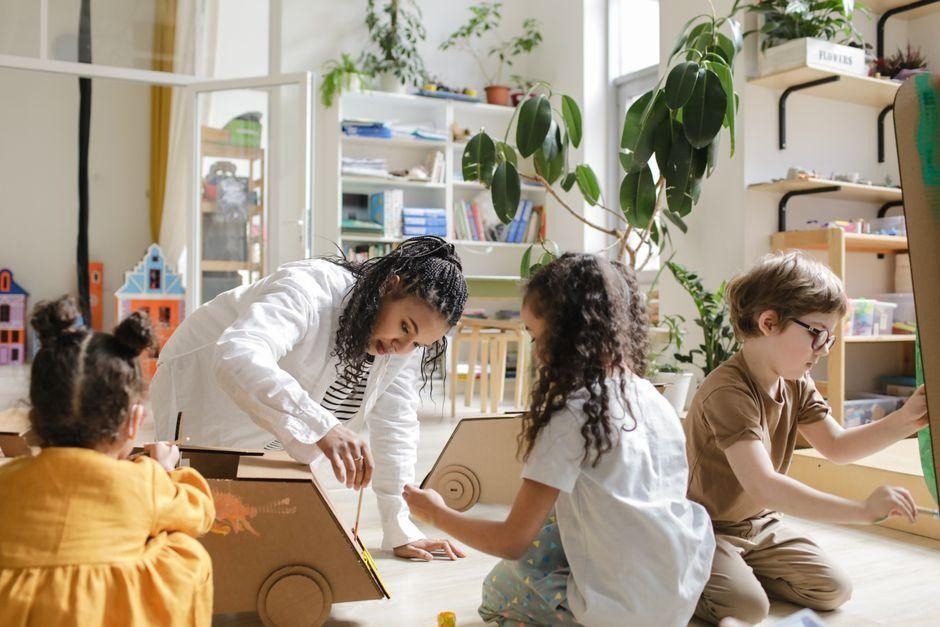
Junk modelling turns cereal boxes, kitchen roll tubes, bottle tops and yoghurt pots into vehicles or buildings. Asking children to sketch a plan first builds planning and fine motor skills as they cut and tape.
Bird feeders start with pine cones rolled in softened lard and coated in seed. Hang them outside a window, and children can keep a tally of visiting birds over the following weeks.
First piano lessons and music at home
Music gives the longest-term payoff of any winter activity. A weekly lesson plus short daily practice builds a routine that carries on naturally into spring. Booking piano lessons with a qualified teacher anchors that routine to a fixed point in the week, one that doesn’t depend on the weather.
Starting piano lessons: age, format and what the first weeks involve
Of all fifteen ideas, activity 5 is the most structured. Many teachers start children at around 5 to 7, depending on hand size and attention span. Recognising letters and numbers helps as well, since note names use letters and fingering uses numbers.
| Format | Main advantage |
| One-to-one, in person | The whole lesson stays focused on your child |
| Online, over video | No travelling in bad weather |
Early lessons concentrate on posture and hand position, with reading both clefs introduced alongside. Repertoire comes later. First simple pieces with both hands usually arrive after a few weeks of regular practice.
On the practical side, a digital keyboard with weighted keys is enough to begin. Aim for practice sessions of 10 to 15 minutes for young beginners, and accept a free trial lesson if the teacher offers one.
Music activities that need no instrument
Kitchen cupboards supply everything for homemade percussion (activity 6). Rice shakers and saucepan drums are the quickest to make, and an elastic-band guitar stretched over a tissue box adds strings. Tape shaker lids firmly shut, because loose rice is a choking risk for toddlers.
Use the instruments for clapping games. Play a rhythm, let children copy it, then swap roles.
Writing a family song (activity 7) is an easy first step into composition, something many music schools also encourage. Children choose a familiar tune and write new words about the family or the dog.
Active indoor games for burning off energy
When outdoor time shrinks, physical play has to move indoors. Running about helps children get better sleep and concentrate more easily afterwards, so a burst of movement before a quiet task makes sense. The games below need only furniture and floor space, and each one runs happily in a cleared living room.
- Activity 8: Living-room obstacle course. Cushions become hills to crawl over, and chairs make a slalom. Masking tape lines on the floor double as balance beams. Time each lap so children try to beat their own record rather than each other’s.
- Activity 9: Freeze dance or musical statues. Everyone freezes when the music stops. Let children choose the playlist, or have them play the music themselves on a keyboard or homemade drum.
- Activity 10: Indoor treasure hunt. Write rhyming clues for confident readers and draw picture clues for pre-readers, hiding each one near the next.
Before starting, take a few minutes on basic safety checks:
- Move breakables and lamps out of the play area
- Use rugs with non-slip backing or play on carpet
- Agree which rooms are out of bounds
- Keep stairs off limits during chasing games
Settling these boundaries upfront also avoids arguments mid-game.
Kitchen science and building challenges
The kitchen doubles as a classroom when you cook or experiment together. Baking brings in maths and reading, while experiments and building challenges turn children’s questions into hands-on tests. Adult supervision is essential around the oven and hot liquids, but most of the measuring, mixing and stacking can go to the children.
From about age 4, baking together (activity 11) works well with scones or gingerbread. Weighing and measuring brings in real maths, and following a recipe step by step is genuine reading practice.
Activity 12 covers simple kitchen experiments for children aged 5 and over:
- Bicarbonate of soda and vinegar volcanoes: the acid reacts with the bicarbonate and releases carbon dioxide gas, which makes the fizz.
- Salt crystals: dissolve salt in hot water, and as the water evaporates over a few days, crystals form on a string.
- Walking water: paper towels draw coloured water from one glass to the next through capillary action, mixing the colours.
For activity 13, set a building challenge with a clear goal, such as the tallest tower that holds a book. Younger children do better with large blocks or LEGO. From 6 upwards, they can handle spaghetti and marshmallow structures.
Quiet activities for the end of the day
Winter darkness arrives early, so the hour before bed calls for calmer options that help children wind down. A reading den and a jigsaw both work in low light with little noise, and neither involves a screen. Each suits a single child playing alone as much as siblings sharing the space.
A reading den (activity 14) needs blankets draped over chairs and a few cushions. Battery fairy lights finish it off. A weekly library visit keeps the book supply fresh at no cost and gives children something to look forward to.
Jigsaws and board games (activity 15) scale easily with age. Toddlers start on large-piece puzzles, building up to 12 to 24 pieces, while children of 8 and over can take on strategy games that require planning several moves ahead. Puzzles also suit solo play when a parent is busy cooking dinner.
Dimmer lighting signals that the day is closing. Keep the den up for a week or two so it becomes part of the routine.
Planning a balanced winter week indoors
A simple rhythm works best: one active game, one craft and a fixed music or practice slot each day. Rotate the specific activities so nothing feels repetitive.
On Monday, that could mean the obstacle course before lunch and salt dough in the afternoon. A short session at the keyboard before tea completes the day.
Keep a ready-made supplies box with glue, card, tape and scissors so any activity can begin straight away. Add a stack of paper for snowflakes and some masking tape for obstacle lines, then top it up at the weekend.
Let children pick from the list themselves, which gives them a stake in the plan. Recurring commitments such as weekly lessons also give structure to the longer school holidays.
Parents tend to ask the same few questions before getting started, and the answers follow below.
Indoor Activities for Kids: What Parents Ask
What is the best age for a child to start piano lessons?
Most children start between 5 and 7. Readiness signs matter more than age alone, such as focusing for 20 to 30 minutes and recognising letters and numbers.
Do we need a real piano before booking lessons?
No. A full-size digital keyboard with weighted keys is enough for the first months. Upgrade to a piano once your child practises regularly.
Which indoor activities work best for toddlers?
Salt dough, homemade percussion, picture-clue treasure hunts and large-piece puzzles all suit toddlers. Each breaks down into simple, short steps, and all of them need close adult supervision.


