
Turning Your Garden Into an Adventure Space Kids Never Want to Leave
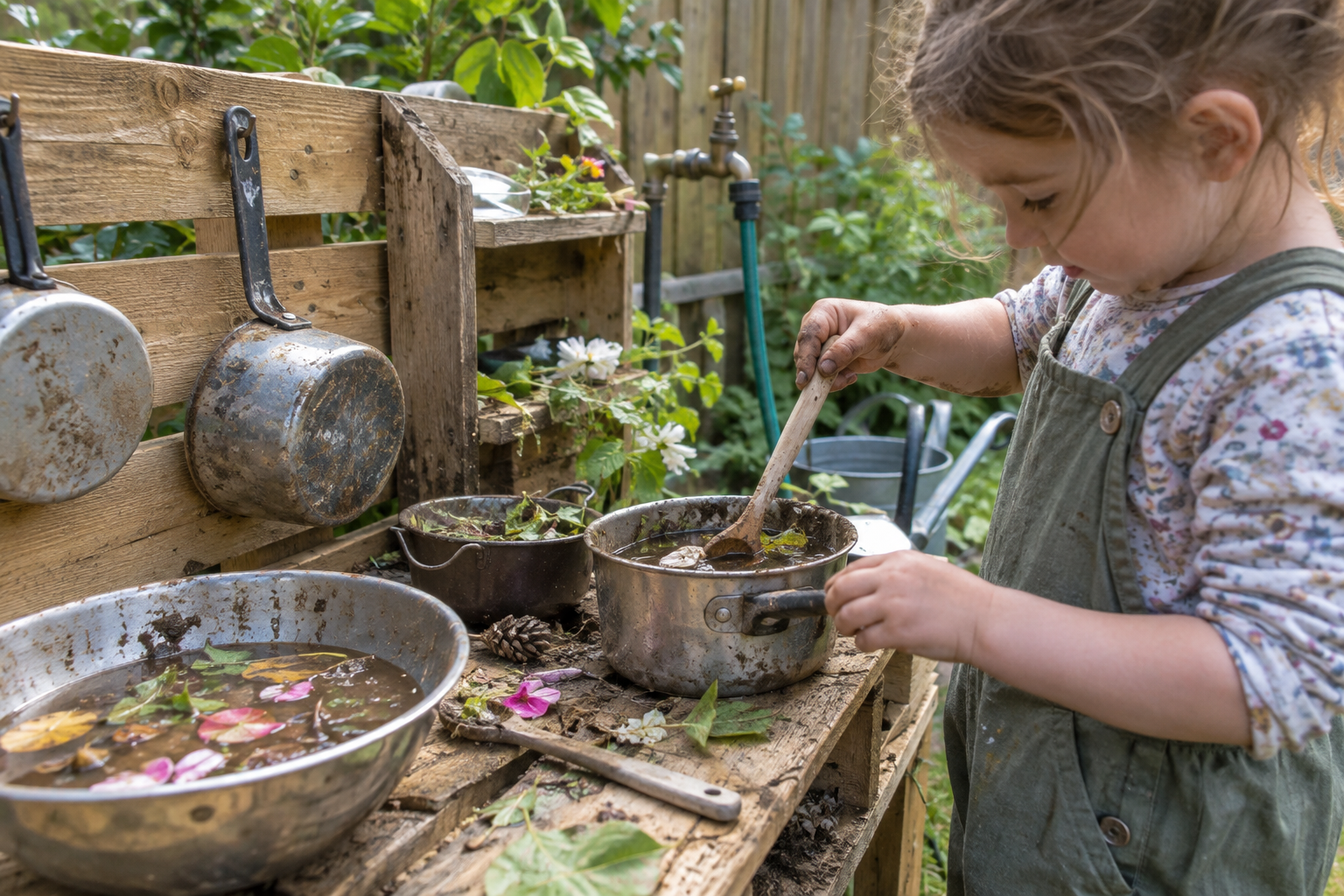
We didn’t set out to redesign our garden. It just happened one weekend after I grew tired of the kids asking to go “somewhere fun” when a perfectly good patch of grass sat six feet from the back door. Somewhere along the way, I realised the garden could be the first adventure of the day.
If you’re raising your own wildlings, you probably already know this. Kids don’t need a National Trust car park to have an adventure. They need space, a bit of mess tolerance, and something that changes often enough to stay interesting.
Here’s how we turned our garden space into a welcoming adventure space.
Start With a Blank(er) Canvas
Before you can build dens or dig for treasure, you need actual open space, and that means dealing with the grass. This was the boring part for me. I love the idea of a garden full of activity zones, but I don’t love spending my Saturday mornings pushing a mower around while the kids wait for me to finish so we can properly start playing.
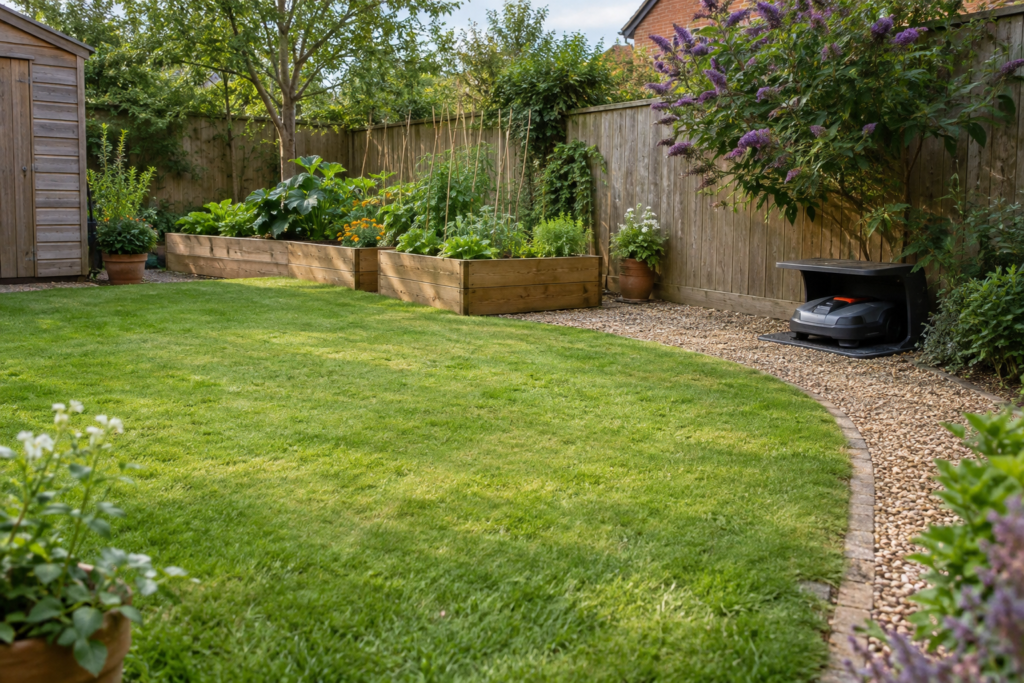
We ended up switching to a robot mower, and it changed our weekend rhythm more than I expected. The lawn stays short and playable without anyone standing over it.
We went with a Segway Navimow, mostly because it doesn’t need a boundary wire buried into the lawn, which mattered to us since half our garden is already given over to raised beds and a gravel path. The range also includes models with smart obstacle avoidance, which can detect and avoid pets, children and garden decorations. That mattered more to us than the wire-free setup, honestly, once we had four kids running in and out of its path all afternoon.
If you’re at the stage of choosing a robot lawn mower for a family garden, that’s worth checking, because not every model handles odd-shaped lawns or obstacles the same way.
It is a small thing in the list of what makes a garden adventure-ready. But reclaiming that hour every week meant more hours actually playing in it.
Build a Den Zone
Every good adventure space needs a base camp. We picked a corner near the fence, half shaded by an overgrown buddleia, and let the kids loose with old sheets, bamboo canes, and whatever branches had come down in the last storm.
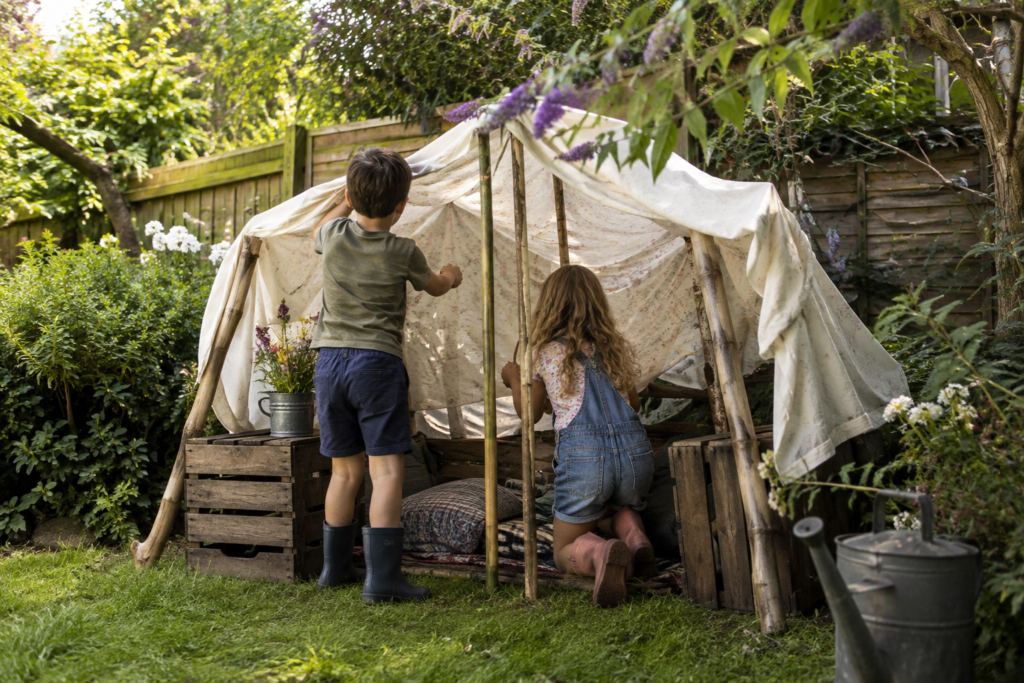
It doesn’t need to be tidy or even structurally sound. Ours has been rebuilt about six times this year, and that’s rather the point. A den that survives untouched all summer isn’t being played with properly.
If you’ve got the space, leave a pile of building materials nearby so nobody has to ask permission to start a fresh one. Old crates, offcuts of wood, the odd tarp. It saves you from a hundred small interruptions to your own gardening or reading time.
Set Up a Mud Kitchen or Sensory Corner
This one gets used more than anything else we’ve built, in every season, in nearly every weather. Ours is a repurposed pallet with a couple of old saucepans screwed to it, some mismatched spoons, and a tap nearby so refills don’t mean trailing through the kitchen. It’s low-cost, low-supervision once they’re old enough, and endlessly reusable, since “mud soup” apparently never gets old.
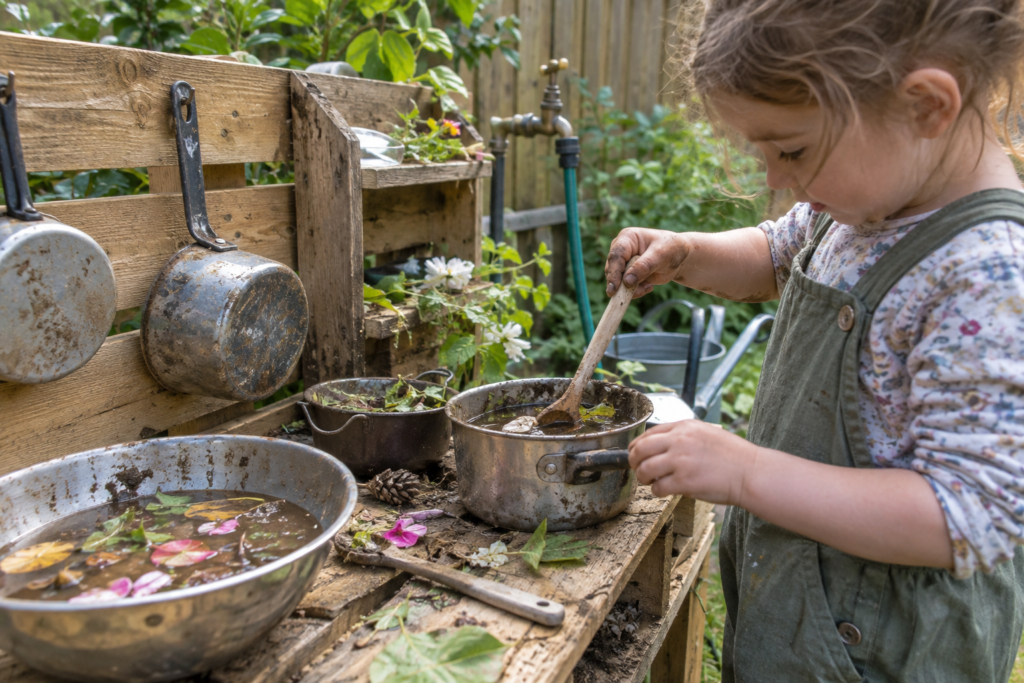
We have written before about setting these up properly, so if you want the full breakdown of what to include and how to keep it from becoming a swamp by July, that’s covered in our mud kitchen post. Worth a read before you build one from scratch.
Add a Nature Trail or Scavenger Hunt Loop
Once the big structures are in place, the garden needs something that changes daily, or the novelty wears off fast. A rotating scavenger hunt does this well. We hide little laminated cards with things to find (a leaf with a hole in it, something that smells nice, three different textures) and swap the list every week or two depending on what’s actually growing or blooming at the time.
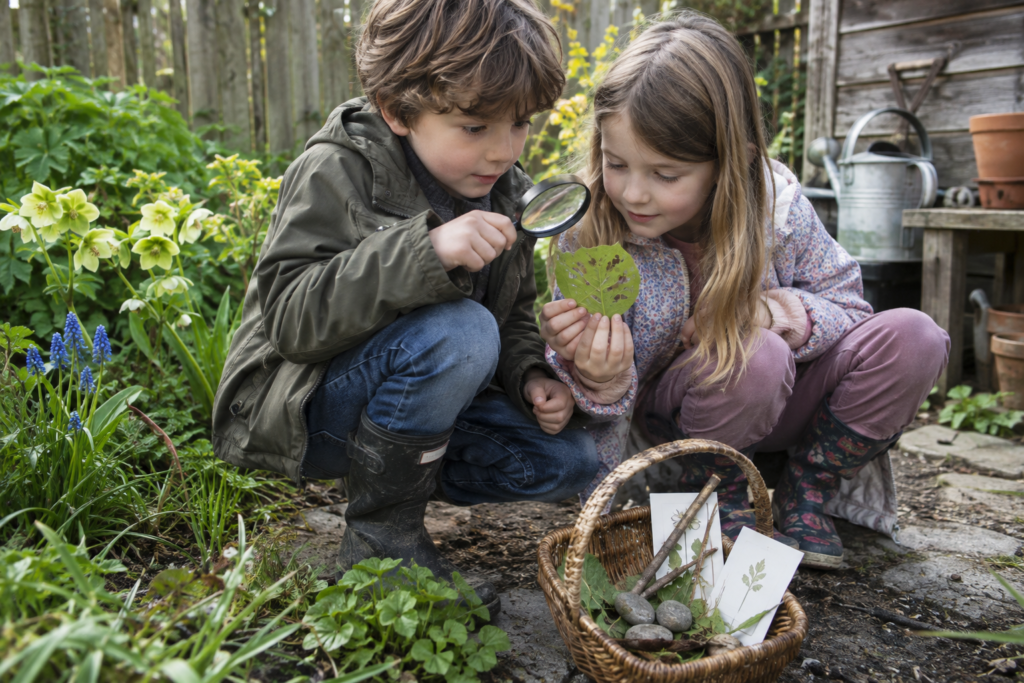
Spring is the easiest season to build a loop like this around, since there’s so much fresh growth to spot and so many excuses to get muddy knees. We put together a full rundown of seasonal garden activities that pair well with a scavenger hunt loop, if you want a starting list rather than building your own from scratch.
Make Room for Wild, Messy Play
Not everything in the garden needs a purpose. Some of it just needs room. We keep one open stretch entirely free of planting or structure, specifically so there’s somewhere to run, do cartwheels, set up an obstacle course out of hula hoops and washing line poles, or just lie on the grass and argue about cloud shapes. While the impulse is to pack every inch of your garden with features, an open, unscripted area often becomes the most utilized space of all.
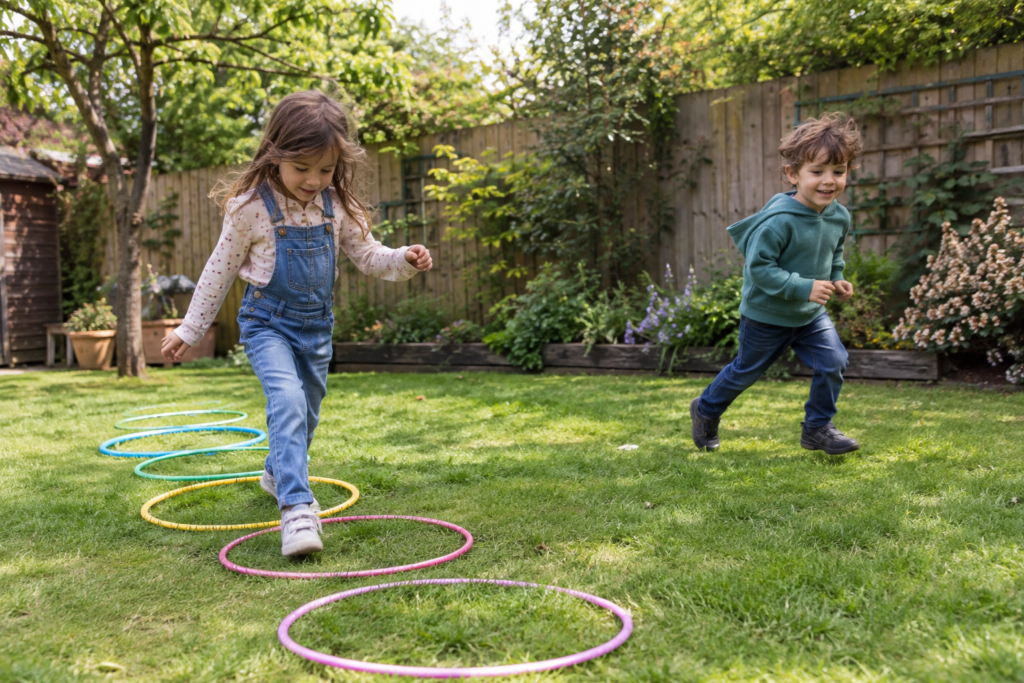
This is also where having a lawn that’s actually usable matters most. Long, patchy grass discourages barefoot running and rolling around in a way that short, even grass doesn’t. It’s a small detail, but it’s the difference between a garden kids treat as a stage and one they treat as scenery.
Bring Learning Outside
Once the garden foundation is laid, it becomes more than a playground—it’s an opportunity for discovery beyond simple free play. We’ve moved a fair bit of homeschooling and after-school learning outdoors over the past year, from writing practice on chalkboards propped against the fence to counting games using pebbles and sticks.